

No products in the cart.

 Krost
Krost Contact us
























Best Air Impact Wrench At 10000
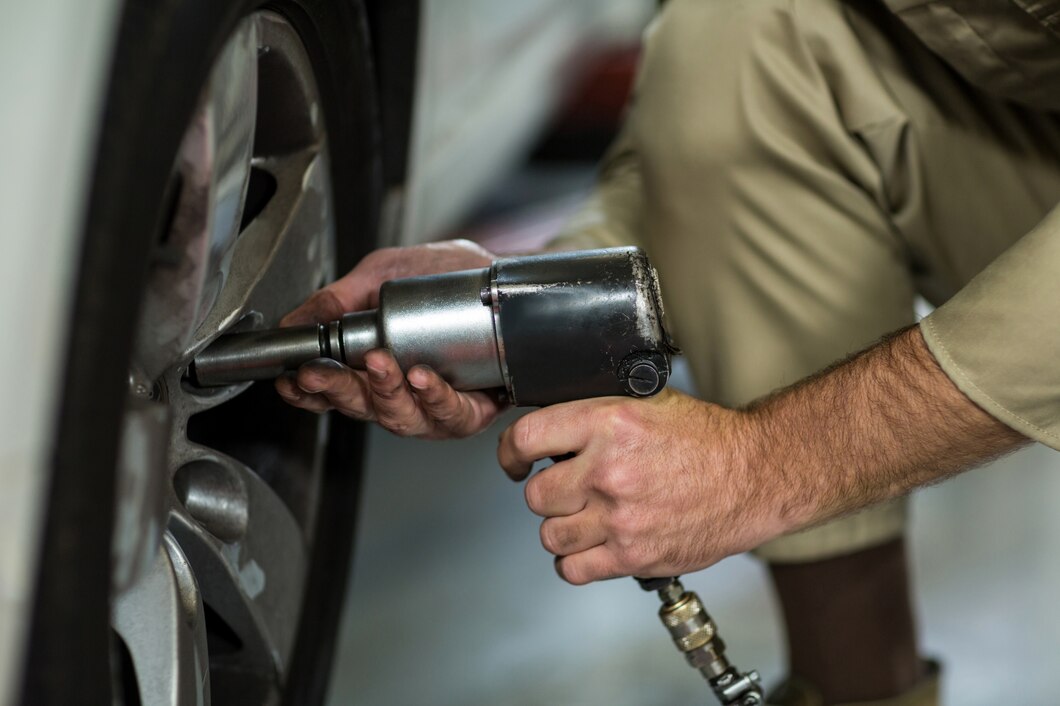
Ever experienced how a five-minute job of fixing something turns out to be an hour just because a single bolt just won’t budge? You use a regular spanner, put in more effort, try different angles, and even get another person to try, but the bolt just will not give in! From automotive servicing to workshops, from assembling machinery and equipment to DIY tasks in the garage, stubborn bolts can really slow things down.
But with an air impact wrench, the whole process becomes very different. Designed to provide high torque with little physical exertion, it can save your time and make your job faster and more efficient. And achieving all of that does not have to cost you an arm and a leg either.
In case you are looking for affordable air impact wrenches between 5000 and 10,000, this article will come in handy for you.
Best air impact wrench under 10000
The ideal tool should provide consistent torque, comfortable handling, and enough versatility to support automotive repairs, workshop maintenance, and construction applications. It doesn’t matter if you’re a DIY enthusiast or a professional technician; the following options offer dependable performance while staying within your budget.
1) EMTOP ECIWL2050 Cordless Impact Wrench
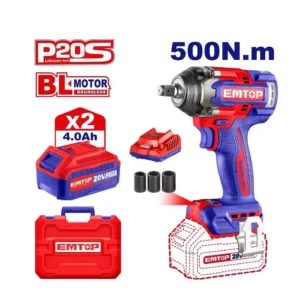
The EMTOP ECIWL2050 is a powerful cordless solution designed for professionals who need mobility without compromising performance. Delivering high fastening torque, this air impact wrench alternative is well-suited for automotive repair, tyre replacement, heavy equipment maintenance, steel fabrication, construction, and industrial installation work. Its cordless design allows users to work freely in workshops or on-site, while the ergonomic grip and compact body improve comfort during extended operation.
Specifications:
- 20V cordless lithium-ion platform.
- 1/2-inch (12.7 mm) square drive.
- Maximum fastening torque: 500 Nm.
- Two-speed operation for better control.
- Integrated LED work light for improved visibility.
- Includes battery and charger.
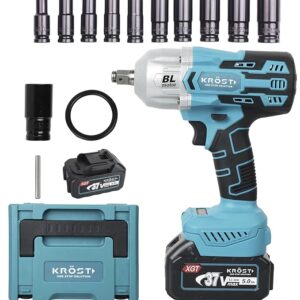
2) KROST Pro Series 700Nm Cordless Impact Wrench

The KROST Pro Series 700Nm Cordless Impact Wrench is built for professionals who need the performance of an industrial impact wrench without being restricted by power cords. Featuring a high-efficiency brushless motor, this tool delivers exceptional torque for demanding applications such as automotive repairs, heavy equipment servicing, structural steel work, machinery installation, and industrial maintenance. Its auto-stop function improves fastening precision, while the cordless design, dual batteries, and integrated LED light make it a dependable choice for extended work across workshops and job sites.
Specifications:
- Maximum torque: 700 Nm.
- High-performance brushless motor.
- 1/2-inch square drive.
- 21V/37V Max dual Li-ion batteries.
- Auto-stop function for controlled fastening.
- Forward and reverse rotation.
- Built-in LED work light.
- Includes two rechargeable batteries and a charger.
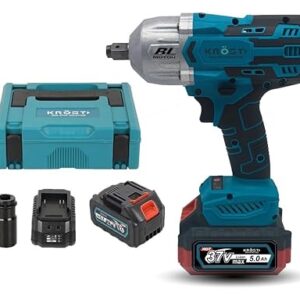
3) KROST X-Series Brushless Cordless Hex Impact Wrench Kit

The KROST X-Series Brushless Cordless Hex Impact Wrench Kit is designed for users who need the performance of a heavy duty air impact wrench with the convenience of a cordless setup. Powered by a brushless motor, it delivers consistent torque for automotive repairs, equipment maintenance, steel fabrication, construction projects, and industrial assembly work. The auto-stop function improves fastening accuracy, while the included sockets and drill chuck adapter make it a versatile solution for professionals handling a wide range of fastening applications.
Specifications:
- Maximum torque: 400 Nm.
- High-performance brushless motor.
- Auto-stop function for controlled fastening.
- Forward and reverse rotation.
- Includes sockets and drill chuck adapter.
- Dual Li-ion batteries with charger.
- Built-in LED work light.
- Durable carry case included.
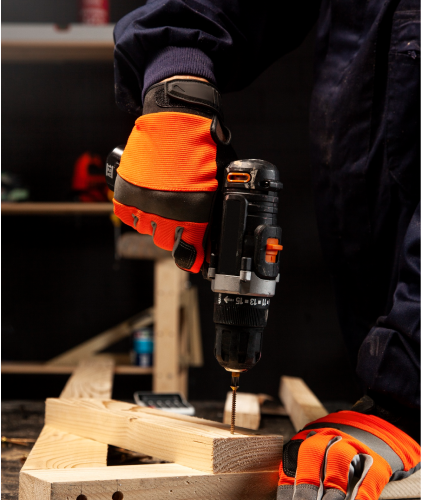
4) Jadever JDDT4B119 20V Brushless Cordless Impact Drill Kit
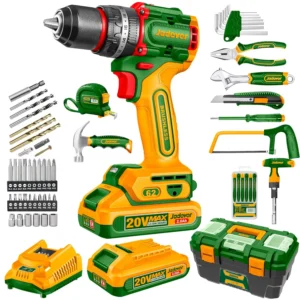
The Jadever JDDT4B119 is a versatile cordless solution designed for users who need the functionality of an impact tool along with the convenience of a complete accessory kit. Powered by a brushless motor, it is suitable for installation work, furniture assembly, electrical projects, woodworking, maintenance tasks, and workshop applications. The extensive accessory set makes it a practical choice for professionals and DIY users who frequently work across different materials and fastening requirements. Its cordless design, dual batteries, and ergonomic handling support greater flexibility and productivity on the job.
Specifications:
- 20V brushless motor.
- Maximum torque: 62 Nm.
- Includes 116 accessories.
- Comes with 2 x 2.0Ah batteries.
- Includes charger.
- Cordless design for improved mobility.
- Suitable for drilling and fastening applications.
How to Choose the Right Air Impact Wrench
Choosing the right air powered impact wrench depends on the type of work you perform and the level of torque required. Before making any purchase, consider these important factors:
- Determine Your Torque Requirements: Light maintenance and DIY projects are usually known to require moderate torque, whereas automotive repairs and industrial applications benefit from higher torque output.
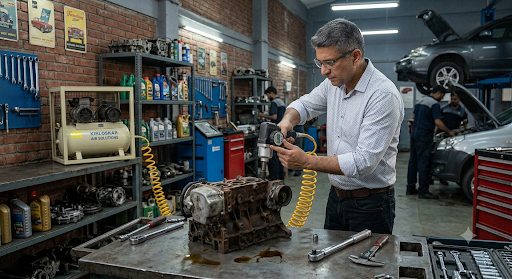
- Consider the Motor Type: Brushless motors should be used where there is a need for better efficiency, longer lifespan, and lower maintenance, as they generally provide these services compared to conventional motors.
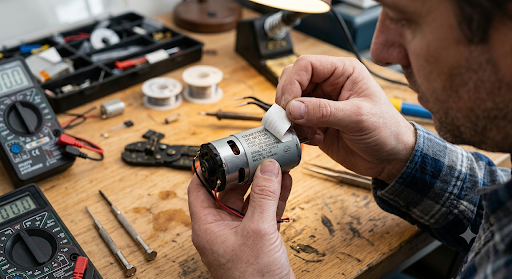
- Look for Speed Control: Variable speed settings are better at providing better control while fastening different sizes of nuts and bolts and help in preventing overtightening.
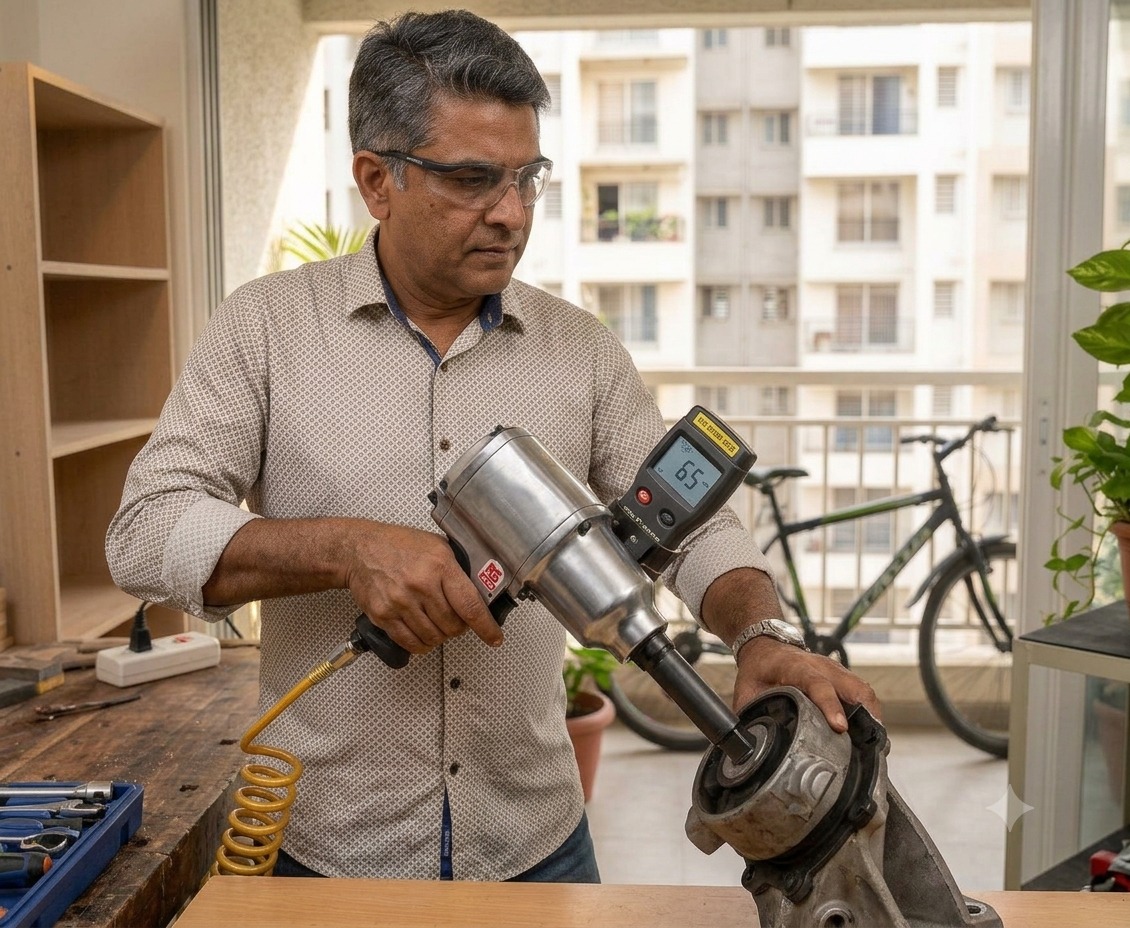
- Check Battery Capacity or Power Source: Higher battery capacities offer longer and uninterrupted operation, making them more suitable for professionals who are working throughout the day.
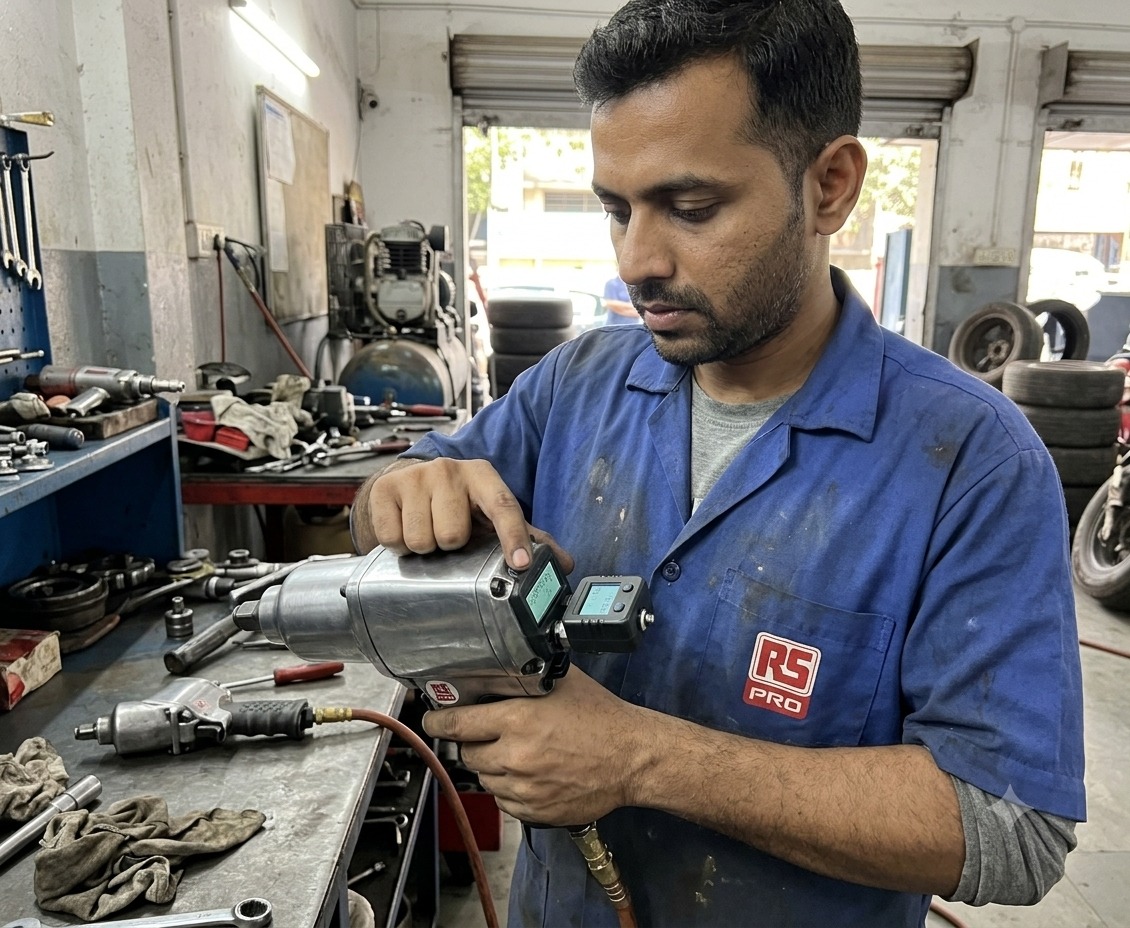
- Look for Complete Kits: Models supplied with batteries, chargers, sockets, and carrying cases give better overall value and are ready for use immediately.
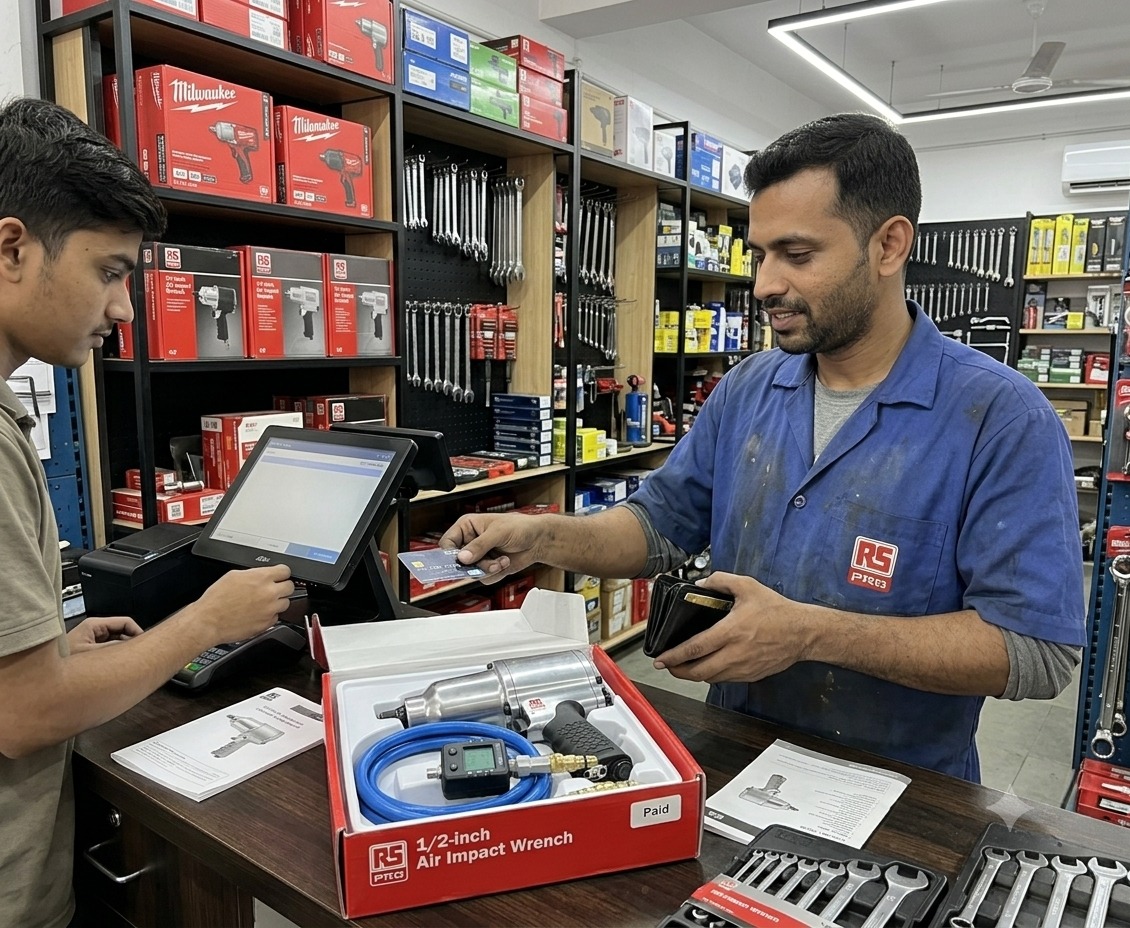
Where Can Air Impact Wrenches Be Used?
A quality garage impact wrench is helpful across a wide range of fastening applications, thus making it an essential tool for professionals as well as DIY users alike.
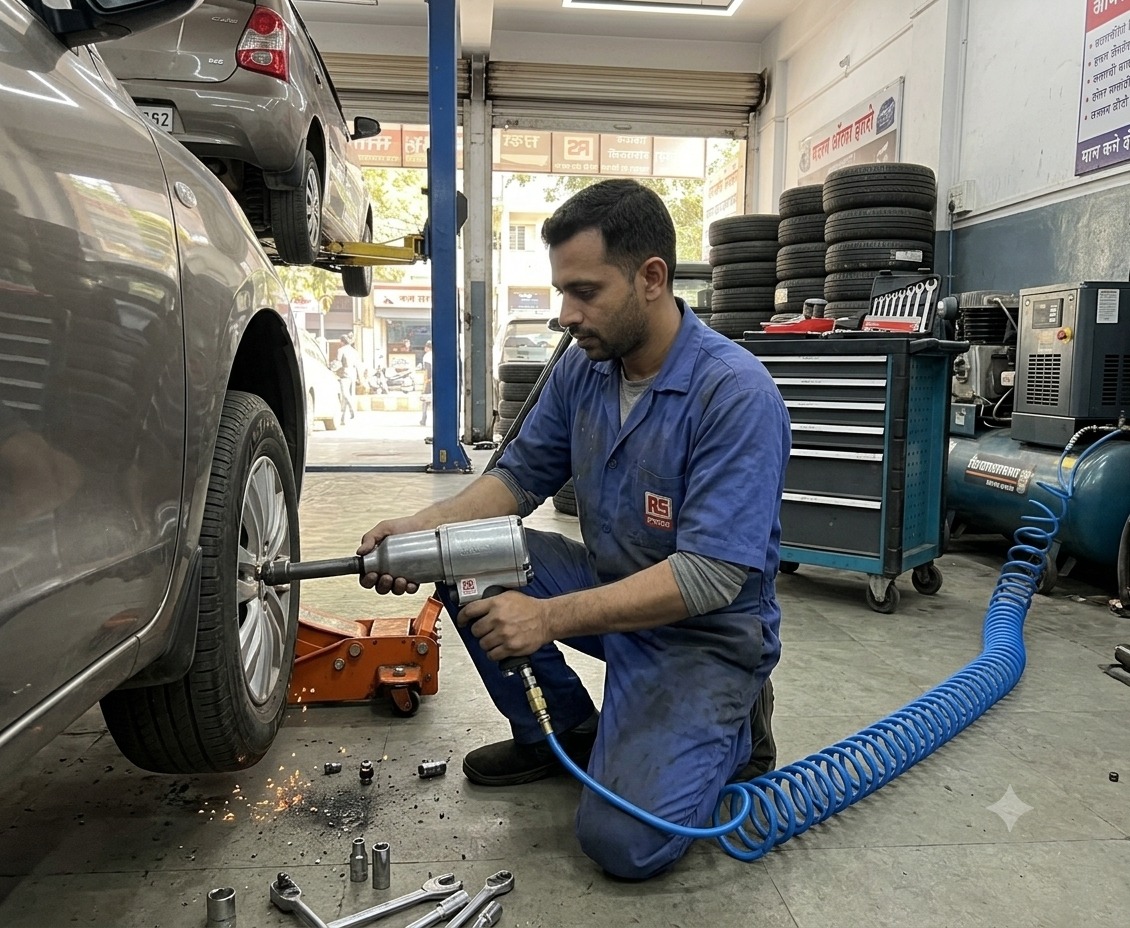
- Automotive Repairs: Removing and tightening wheel nuts, suspension components, engine parts, and other fasteners becomes significantly faster using an air impact gun.
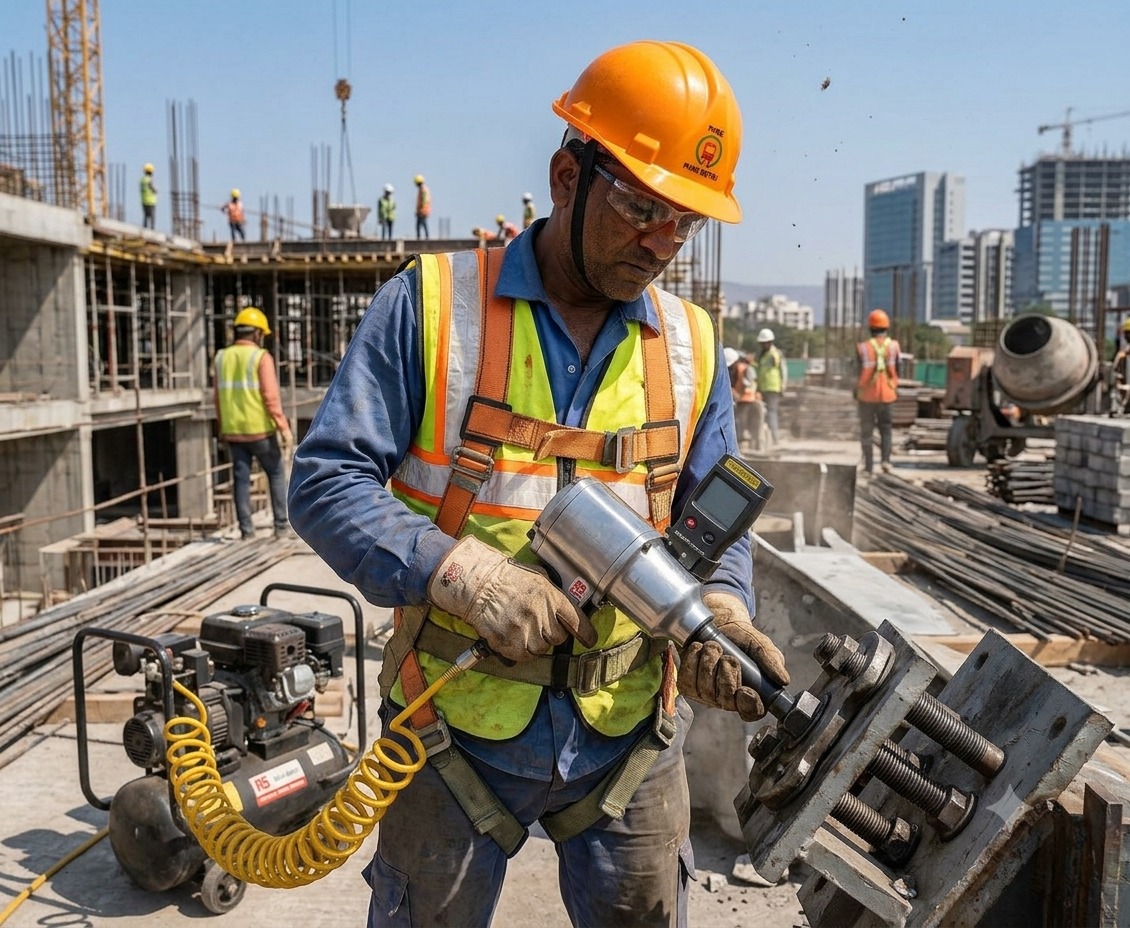
- Construction Projects: Impact wrenches are known to not only simplify fastening structural bolts but also assemble heavy-duty equipment on construction sites.
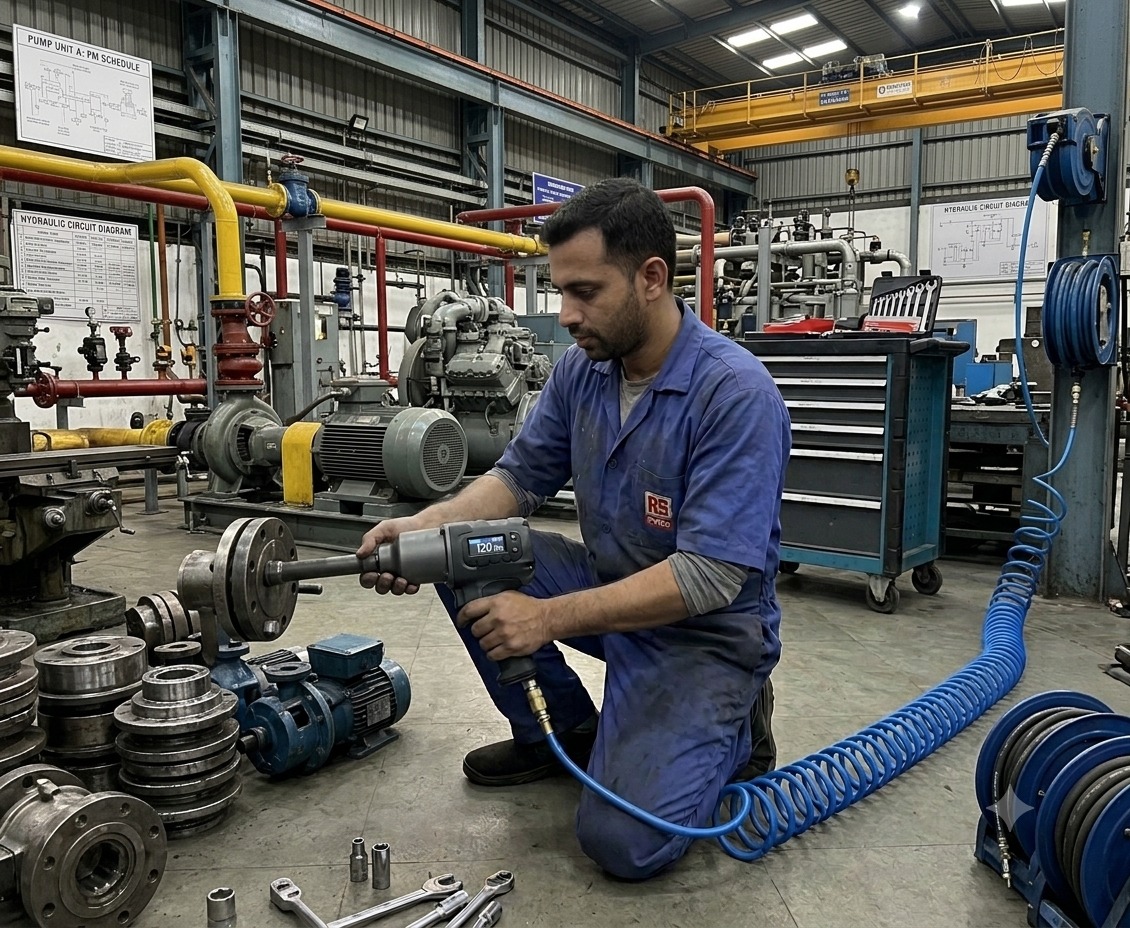
- Industrial Maintenance: Both manufacturing plants and maintenance teams use these tools for assembling machinery, equipment servicing, and production line repairs.
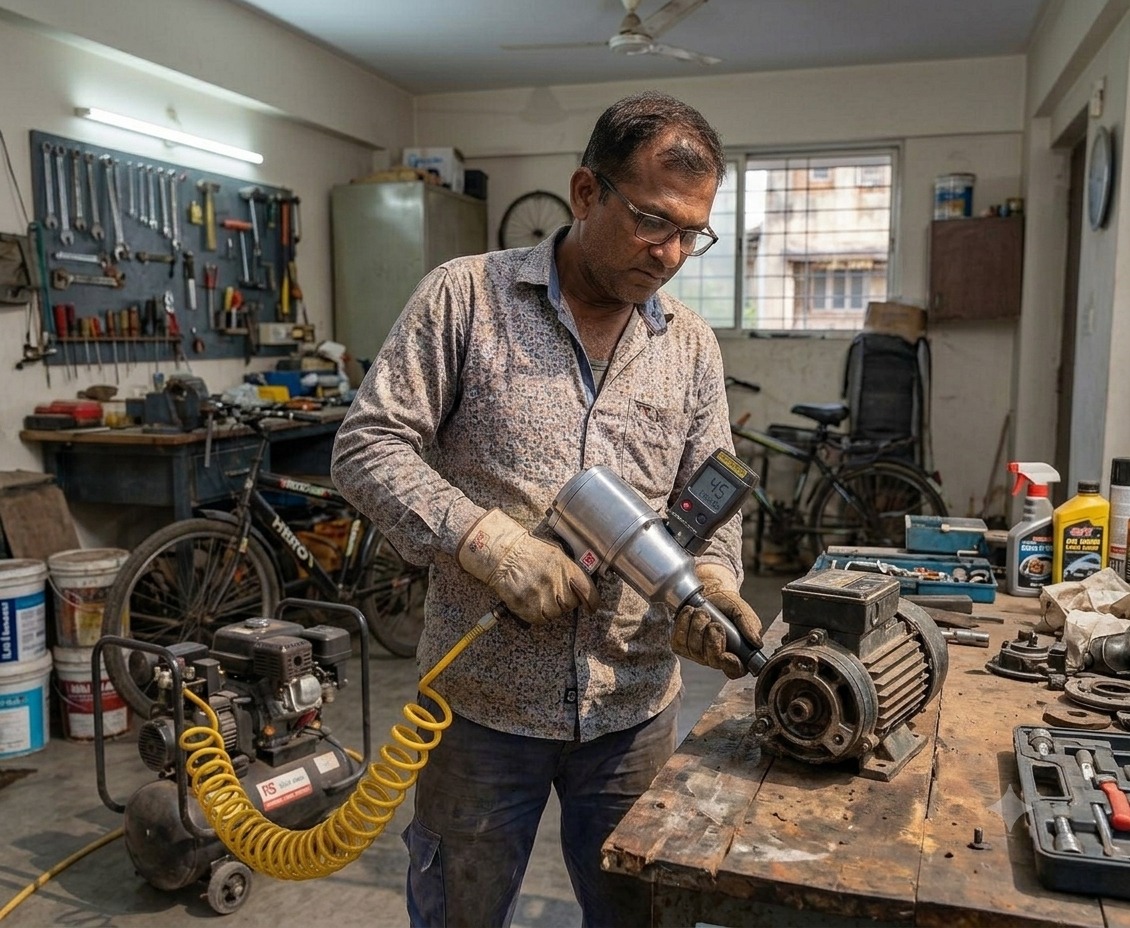
- Home Workshops: DIY enthusiasts can use a workshop impact wrench for furniture assembly, equipment maintenance, and personal automotive projects.
- Heavy Equipment Servicing: Construction machinery, generators, compressors, and industrial equipment often require powerful fastening tools that are capable of handling the heavy demands of workloads.
Conclusion
By now, you should have a clearer idea of what to look for in an air impact wrench. From torque output and motor efficiency to overall build quality, every feature contributes to better performance on the job. The products featured above stand out as reliable choices under 10000, making it easier to find a tool that delivers lasting value.
When purchasing your air impact wrench, be sure to compare torque output, motor type, battery life, ergonomics, and other accessories included with each unit. Choosing an air impact wrench that best fits your job requirements will give you maximum efficiency and long-term dependability. To help you make your purchase decision easier, AtoZ Shop has put together a full range of reputable impact wrenches from manufacturers you know and trust so you can confidently purchase the correct air impact wrench to complete the job.
FAQs
- Can I use an air impact wrench on wooden or plastic materials?
Air impact wrenches are designed primarily for fastening metal components. Using them on wood or plastic without proper control may damage the material due to the high torque they generate. - What is the difference between breakaway torque and fastening torque?
Breakaway torque refers to the maximum force used to loosen a tightened or seized fastener, while fastening torque is the force applied to tighten a nut or bolt securely. - Do all air impact wrenches require the same air pressure?
No. Different models have different operating pressure requirements. Always check the manufacturer’s recommended PSI to ensure optimal performance and avoid damaging the tool. - Can an air impact wrench be used for motorcycle repairs?
Yes, many air impact wrenches are suitable for motorcycle maintenance. However, using the appropriate torque setting is important to avoid damaging smaller fasteners and delicate components. - Why are impact-rated sockets recommended with an air impact wrench?
Impact sockets are specifically designed to withstand high torque and repeated impacts. They are stronger than standard sockets and help improve safety while reducing the risk of cracking or breakage. - Is it necessary to lubricate an air impact wrench regularly?
Yes, regular lubrication helps reduce internal wear, keeps moving parts operating smoothly, and extends the overall lifespan of the tool while maintaining consistent performance. - Can an air impact wrench be used in outdoor job sites?
Yes, air impact wrenches are commonly used on construction sites, roadside repairs, and industrial locations. Ensure the air compressor and hose provide adequate pressure for reliable operation in outdoor environments.