Sanders plays a pivotal role in woodworking, metalworking, or any project requiring surface finishing. Understanding the different types of sanders and their specific uses is essential for achieving optimal results in various tasks. Sanders are power tools designed to smooth surfaces through abrasion with sandpaper, but the variations in design and functionality cater to specific needs and materials. This comprehensive guide will delve into the world of sanders, exploring the different types available and their respective applications.
What Are Sanders?
Sanders, versatile devices used to smooth surfaces by abrasion with sandpaper, are a powerful tool in the hands of woodworkers, carpenters, DIY enthusiasts, and professionals in the construction and renovation industry. They’re not just limited to woodworking and carpentry but can also be handy for automotive, metalworking, and even DIY projects around the house. Each type of sander, from belt sanders to orbital sanders and random orbital sanders, has its unique advantages and best uses, empowering you to choose the right tool for your specific task, depending on factors like the type of material being worked on and the desired finish.
A drywall sander is a specialised type explicitly designed for smoothing and finishing drywall surfaces. Drywall sanders are used in the construction and renovation industry, particularly for projects involving installing or repairing drywall.
Unlike traditional sanders, drywall sanders are equipped with a long handle and a flat sanding head, often with a rectangular or circular shape. They are typically lightweight and feature a dust collection system to minimise the amount of dust generated during sanding.
Drywall sanders, a specialised type of sander, are often used with a vacuum cleaner or dust extractor to reduce dust and debris further. They can sand large areas quickly and efficiently, making them indispensable tools for professionals and DIY enthusiasts working with drywall. Their efficiency not only saves time but also ensures a smooth and professional finish, adding value to your projects.
A random orbital sander is a versatile power tool for sanding various materials, including wood, metal, and plastic. It’s called “random orbital” because it operates by simultaneously rotating and vibrating in random orbits, which helps prevent visible swirl marks on the surface being sanded.
They’re commonly used in woodworking, furniture making, automotive refinishing, and other applications where a smooth, scratch-free surface is desired. The random orbital sander is prized for its ability to efficiently remove material while minimising the risk of leaving noticeable swirl marks, making it a popular choice among professionals and DIY enthusiasts.
A pneumatic orbital sander, also known as an air orbital sander, is a power tool that operates using compressed air. Unlike most orbital sanders, which are powered by electricity, pneumatic sanders use air pressure to drive the sanding pad’s motion.
While pneumatic tools require an air compressor and hose for operation, they offer advantages such as a higher power-to-weight ratio, lighter weight, and potentially longer lifespan due to simpler internal mechanisms than their electric counterparts.
Different Types Of Sanders: Belt Sander
Belt sanders are robust power tools for efficient material removal and surface smoothing. Their defining feature is a continuous loop of sandpaper that rotates around two cylindrical drums, enabling rapid sanding over large areas. Widely used in woodworking and construction, these tools excel at tasks like levelling uneven surfaces, removing old finishes, and shaping wood or metal. Variable speed control is a standard feature, allowing users to adjust sanding speed to suit different materials and desired finishes.
Due to their aggressive nature, belt sanders are particularly practical for heavy-duty sanding applications. However, their power and speed require careful handling to prevent over-sanding or damage to the workpiece. Many belt sanders are equipped with dust collection systems or can be connected to a vacuum cleaner, minimising airborne dust and debris for a cleaner work environment. Despite their versatility and efficiency, users should exercise caution and skill to achieve optimal results without compromising the integrity of the material being worked on.
Different Types Of Sanders: Disc Sander
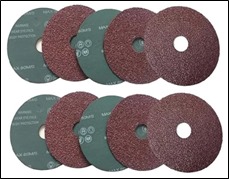
A disc sander is a power tool used for sanding and smoothing surfaces, primarily in woodworking and metalworking applications. A round sanding disc is mounted on a rotating spindle, typically driven by an electric motor.
Disc sanders are commonly used for tasks such as smoothing edges, shaping curves, and removing material quickly. They are versatile tools suitable for rough sanding and fine finishing work, depending on the grit of the abrasive disc used. However, proper safety precautions should be observed when operating a disc sander to prevent accidents and injuries like any power tool.
Uses Of Sanders
- Smoothing drywall surfaces during installation or repair.
- Removing excess joint compound or texture.
- Achieving a flat and even finish on walls and ceilings.
- Preparing surfaces for painting or wallpapering.
- Reducing the need for manual sanding, saving time and effort.
- Finishing tasks in woodworking, metalworking, and automotive refinishing.
- Removing old finishes, such as paint or varnish.
- Smoothing surfaces and blending uneven areas.
- Achieving a scratch-free finish with reduced risk of swirl marks.
- Suitable for both rough sanding and fine finishing work.
- Smoothing metal surfaces in industrial and automotive settings.
- Removing paint, rust, or corrosion from metalwork.
- Preparing surfaces for painting, coating, or welding.
- Offering high power-to-weight ratios for prolonged use.
- Providing versatility and efficiency in material preparation tasks.
- Rapid material removal and levelling of surfaces.
- Shaping wood and smoothing large flat surfaces.
- Removing old finishes or paint layers quickly.
- Suitable for rough sanding tasks requiring aggressive abrasion.
- Less suitable for fine finishing work due to their aggressive nature.
- Shaping, smoothing, and finishing various materials.
- Sanding curved edges and shaping irregular surfaces.
- Smoothing end grain and preparing surfaces for joinery.
- Offering precise control and versatility in sanding tasks.
- Suitable for rough and fine sanding applications, depending on the grit of the abrasive disc.
Conclusion
In conclusion, sanders are indispensable tools for artisans, DIY enthusiasts, and professionals. From the versatile random orbital sander to the specialised drywall sander, each type serves a unique purpose, offering efficiency, precision, and convenience in surface preparation and finishing tasks. By understanding the uses and advantages of different types of sanders, individuals can choose the right tool for the job, ensuring seamless results and enhancing the quality of their projects. Whether smoothing drywall surfaces, shaping wood, or preparing metal for painting, there’s a sander tailored to meet every need, making sanding tasks more manageable and achieving professional-quality results achievable for all.




 Krost
Krost Contact us