

No products in the cart.

 Krost
 Contact us


























Bosch 12V vs 18V Cordless Tools: Which One Should You Buy?
You are halfway through assembling a wardrobe, the screw sits in an awkward corner, and your drill is too big to fit. Or you are hanging a heavy shelf, and the small driver gives up halfway. Either way, you realise the tool matters as much as the job.
Then comes the shopping part. Bosch lists tools in 12V and 18V, and the numbers feel like a puzzle. Is bigger always better? Will your first battery work with the next tool you buy? Most people just guess, and guesses get expensive.
Here is the simple truth: voltage is only one part of the answer. Size, weight, torque, and the work you actually do matter just as much. This blog will help you understand the difference between Bosch 12V and 18V tools and pick the setup that fits your work, budget, and plans.
Bosch 12V vs 18V Cordless Tools: What Is the Difference?
What Does 12V or 18V Mean?
- Voltage class: It refers to the battery platform’s nominal voltage, so it tells you which system the tool belongs to, not how good it is.
- Not the full story: Higher voltage alone does not decide performance, so never judge a tool only by the number printed on the battery.
- Other factors: Motor design, tool mechanism, battery capacity and the exact application also affect how a tool performs on the job.
Size, Weight and Handling
- Compact 12V: Smaller 12V tools are easy to handle for overhead work, cabinetry, furniture assembly and other jobs in tight spaces.
- 18V size: Some 18V tools are larger or heavier, depending on the model and the battery you attach to them.
- Total weight: Always compare the weight of the full tool with the battery fitted, because that is what your arm carries all day.
Power and Application Range
- 18V range: Bosch offers 18V tools for demanding jobs like drilling, grinding and cutting, so there is more choice for heavy work.
- 12V capability: 12V tools still handle many professional and everyday tasks, as long as their specifications match the job you have.
Bosch 12V vs 18V Cordless Tools: Product Options to Compare
These are examples of what each system offers, not a ranking. Compare the specifications against your own work, and check the live listing for price, stock, and package contents.
For Compact Drilling and Screwdriving
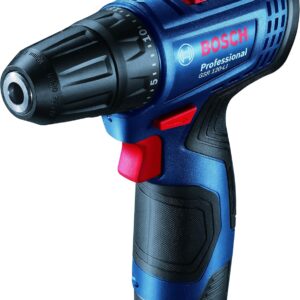
The Bosch GSR 120-LI Cordless Drill Driver with Battery, Charger and Carry Case suits home repairs, furniture assembly and everyday drilling or screwdriving. It has a two-speed gearbox, 14/30 Nm soft/hard torque, and comes with batteries, a charger and a carry case. Check its drilling capacity and battery runtime against the jobs you do most often.
For Tight Spaces and Lightweight Handling

The Bosch GSR 12V-35 HX Cordless Screwdriver is built for screwdriving and drilling in restricted spaces. It has a brushless motor, a 1/4-inch bit interface and weighs about 0.57 kg without the battery. The listing says the battery and charger are sold separately. It is a handy screwdriver/drill option, not a replacement for every high-torque tool.
For Cordless Bolting and Workshop Fastening
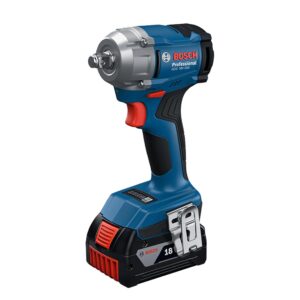
The Bosch GDS 18V-350 Professional Cordless Impact Wrench is made for bolting and fastening. It has a compact 131 mm head and three torque levels of 85, 200 and 350 Nm. An impact wrench is not a substitute for a drill/driver, so pick it for fastening jobs. Check whether the battery and charger are included.
Bosch 12V vs 18V Battery Compatibility and Runtime
- Separate systems: Bosch Professional 12V batteries and chargers work with the compatible 12V system, while 18V batteries and chargers work with the 18V system.
- Ah capacity: Amp-hour (Ah) shows how much energy a battery stores, so a higher number can give longer runtime, but it does not mean more power.
- Weight and bulk: Higher-capacity batteries can add weight and bulk, which you will feel during long overhead or one-handed jobs.
- Kit or bare: Check whether the tool is sold as a bare tool or a kit, because only a kit includes the battery and charger.
- Exact model: Confirm the battery compatibility details for the exact model and package before you place the order.
Conclusion
The right choice comes down to a few things: the type of work you do, the performance you need, how comfortable the tool feels in your hand, battery compatibility and your plans for future tools. Compare specific models instead of choosing on voltage alone, and you will end up with a setup that actually fits your projects.
Explore Bosch cordless tools at AtoZ Shop, compare the specifications, and choose a 12V or 18V setup that suits your projects.
FAQs
- What is the main difference between Bosch 12V and 18V tools?
They belong to two separate battery systems. 12V tools are generally more compact, while 18V tools cover a wider range of demanding applications. - Is a Bosch 18V drill more powerful than a 12V drill?
Not always. Torque, speed, motor, and tool design matter too, so compare the specifications of the exact models. - Are Bosch 12V batteries compatible with 18V tools?
No. 12V batteries work within the 12V system, and 18V batteries work within the 18V system. - Are Bosch 12V tools suitable for professional use?
Yes, many 12V tools handle professional and everyday tasks when their specifications match the job. - When should I choose a Bosch 18V cordless tool?
Choose 18V for frequent drilling, heavier fastening, cutting, or grinding, as long as the model is rated for that work. - Does a higher Ah battery provide more power?
Not necessarily. Higher Ah means more stored energy and usually longer runtime, but it adds weight and does not increase tool power by itself. - Should I buy a cordless tool kit or a bare tool?
A kit includes the battery and charger, which suits first-time buyers. A bare tool works if you already own compatible batteries and a charger. - Can I use the same charger for Bosch 12V and 18V batteries?
No. Chargers belong to their own voltage system, so use the one made for the battery you have.