

No products in the cart.

 Krost
 Contact us























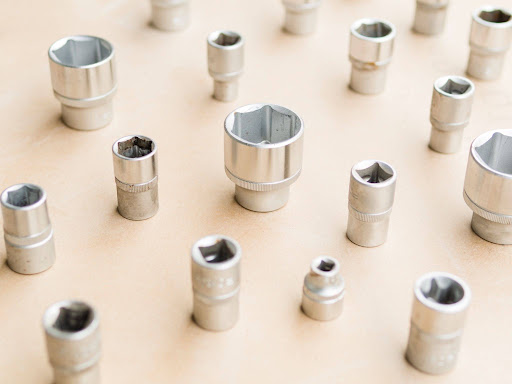
How to Choose the Right Sockets for an Impact Wrench
You have the impact wrench, the battery is charged, and the wheel nut is stuck. You grab a socket from the old toolbox, push it on, and pull the trigger. The nut barely moves, and the socket looks tired. It happens more often than you think.
An impact wrench hits a fastener with short, hard bursts of force, and the socket takes every one of those hits. A bad fit, or a socket not built for impact, can round off the nut or even crack under load. That gets risky fast.
The fix is simple once you know what to look at. This blog will help you understand drive size, socket material, size, depth, point design and safety, so you can pick sockets that match your wrench, your fasteners and the jobs you do every week.
What Makes an Impact Socket Different from a Regular Socket?
Impact sockets are built to handle the repeated shock loads that impact tools create, while regular sockets are made for manual tools only. Never assume a standard hand-tool socket is safe on an impact wrench, because it can crack or shatter under repeated hits and become a real safety risk.
Impact sockets are commonly made from chrome molybdenum (Cr-Mo) steel and often have a dark finish. However, colour alone is not proof of an impact rating. Always check the product specifications and markings before you buy, so you know the socket is truly made for use with an impact wrench.
How to Choose the Right Sockets for Your Impact Wrench
Match the Socket Drive Size to Your Wrench
- What it is: Drive size is the square connection between the wrench and the socket, not the size of the nut you are turning.
- Common sizes: 3/8-inch suits smaller automotive work, 1/2-inch covers many general automotive and workshop jobs, and 3/4-inch handles larger, heavy-duty fasteners.
- Match the anvil: The socket’s drive size should match the wrench’s anvil, so check the manufacturer’s recommendations before you buy.
Choose the Correct Socket Size
- Drive vs fastener: Drive size is the connection to the wrench, while socket size is the opening that fits your nut or bolt head.
- Metric first: Metric sockets are commonly used for many vehicles and machines in India, so they are a safe starting point.
- Measure, don’t guess: Check the fastener size instead of forcing a near-fitting socket, which can damage both the socket and the fastener.
- SAE sizes: Choose SAE/imperial sockets only if your equipment uses imperial fasteners.
6-Point or 12-Point Impact Sockets?
- 6-point: These grip the flats of a hex fastener and are generally a sensible choice for high-torque impact work.
- 12-point: They offer more engagement positions in restricted spaces, but make sure the socket is impact-rated and suits the fastener.
- Fastener condition: Check whether the fastener is worn, seized or corroded, because a poor grip is where damage usually starts.
Standard or Deep Impact Sockets?
- Standard: Standard sockets suit accessible fasteners and are easier to handle in most everyday jobs.
- Deep: Deep sockets reach recessed nuts or fasteners on longer studs, and can help with some wheel and automotive jobs.
- Clearance: Think about the space around the fastener and the extra length of a deep socket, since not every application needs one.
Which Impact Socket Set Should You Choose for Your Work?
These sets are examples for different needs, not a ranking. Compare the included sizes with your own fasteners, and check the live listing for price, stock and package contents.
For Common Automotive and Workshop Jobs

The INGCO 10PCS 1/2″ Drive Cr-Mo Impact Socket Set suits users whose impact wrench has a matching 1/2-inch drive. It has 10 metric sockets made from Cr-Mo steel, covering sizes from 10 to 24 mm. Not every size in that range is included, so match the sizes against your actual fasteners and confirm the impact rating on the listing. Do not assume it covers every automotive job.
For Recessed Fasteners and Longer Studs
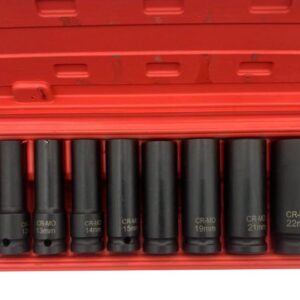
The KROST 1/2-Inch Drive Metric Deep Impact Socket Set, 10–24 mm is made for nuts that a standard socket cannot reach because of a long stud or a recessed position. It has a 1/2-inch drive, 10 metric sockets and a socket length of about 78 mm. The listing describes the material as Cr-V steel, so confirm the manufacturer’s impact rating and material details before using it with an impact wrench.
For a Wider Range of Socket Sizes

The KROST 24-Piece 1/2-Inch Drive Impact Socket Set, 8–32 mm suits people who work on different fasteners and want a wide range of metric sizes in one kit. It is advertised with an 8–32 mm range, plus extension bars and adapters. Check which socket depths, extensions and adapters are actually supplied. The listing mentions mixed materials, including chrome vanadium steel, so verify which parts are impact-rated before using them with an impact wrench.
For Both Standard and Deep Socket Options
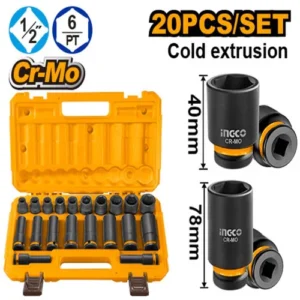
The INGCO 20-Piece 1/2-Inch Drive Cr-Mo Standard & Deep Impact Socket Set gives you standard and deep sockets in one set, so you can handle open and recessed fasteners without buying two kits. It has a 1/2-inch drive, Cr-Mo material and a 10–24 mm range. Verify the exact number of standard and deep sockets, the included sizes and current availability.
Common Mistakes to Avoid When Buying Impact Sockets
- Hand sockets: Using regular hand-tool sockets with an impact wrench.
- Wrong drive: Buying the wrong drive size or assuming an adapter makes every combination safe.
- Poor fit: Choosing a socket that does not fit the fastener properly.
- Depth: Ignoring whether a deep socket will fit in the available space.
- Piece count: Buying a large set without checking the actual socket sizes.
- Black finish: Assuming a black finish automatically means the socket is impact-rated.
Conclusion
The right impact socket comes down to a few things: the impact rating, drive size, fastener size, socket depth, point design and material. Before you buy, check that the socket works with both your impact wrench and the fasteners you actually work on. A set that fits properly lasts longer and keeps your work safer.
Explore impact socket sets at AtoZ Shop, compare the included sizes and choose a set that matches your wrench and workshop needs.
FAQs
- Can I use regular sockets with an impact wrench?
No. Regular sockets are made for manual tools and can crack under impact. Use sockets rated for impact use. - What size socket fits my impact wrench?
Match the socket’s drive size (3/8, 1/2 or 3/4 inch) to your wrench’s anvil, then pick the socket size that fits your fastener. - Are 6-point sockets better for impact wrenches?
Generally yes, because they grip the flats of a hex fastener well under high torque. A 12-point socket can work in tight spaces if it is impact-rated. - What is the difference between shallow and deep impact sockets?
Shallow sockets suit accessible fasteners. Deep sockets are longer and reach recessed nuts or fasteners on longer studs. - Is Cr-Mo better than Cr-V for impact sockets?
Cr-Mo is the material commonly used for impact sockets. Whatever the material, check the manufacturer’s impact rating before use. - Should I buy a metric or SAE impact socket set?
Metric suits many vehicles and machines in India. Choose SAE only if your equipment uses imperial fasteners. - Do I need a deep impact socket set for car work?
Not always. Deep sockets help with long studs and recessed nuts, and some wheel jobs, but many tasks only need standard sockets. - Can I use an adapter to fit a different socket drive size?
Adapters exist, but they do not make every combination safe. Follow the manufacturer’s recommendations and use impact-rated adapters.